

In the fall of 1973…

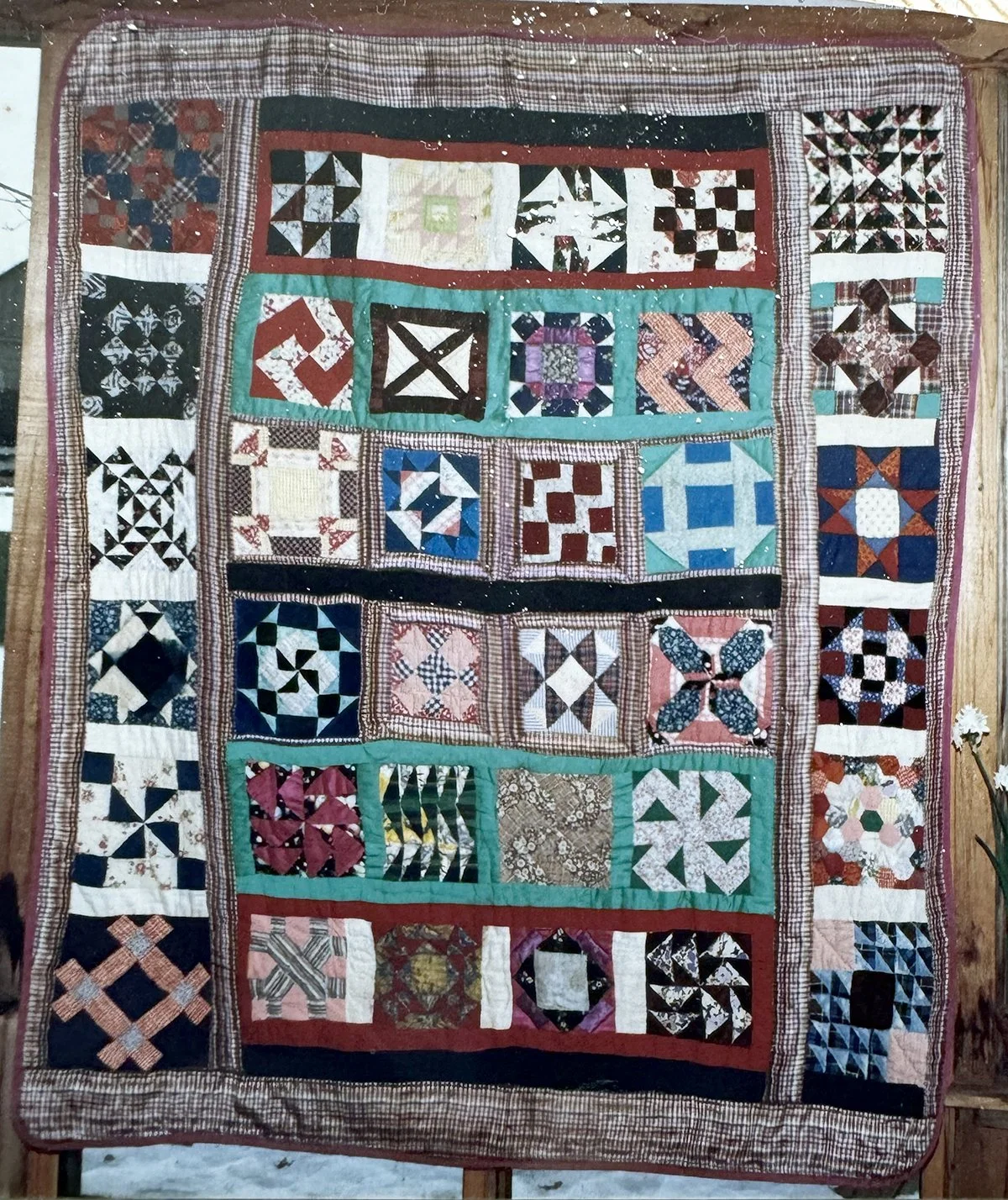
First Quilt
In the fall of 1973, after a year in the dorm, collecting fabric, making clothes, and patching bluejeans for fellow students. She began assembling her first quilt blocks from the geometric patterns she’d imagined while reading the books in Wyoming.
Each block was different. From the start, she was pushing the boundaries of what the traditional quiltmakers she knew of, usually did, using fabrics of differing weights and bright colors. The blocks were all different sizes, so did not fit together in a grid. This led her to join them in unusual ways also. This first top was somehow joined with its backing and a too-fat layer of synthetic batting in between. She quilted it on an antique wooden quilting frame she somehow learned was owned by the Essex Institute, in the lobby of the Essex Institute in Salem, MA during the summer of 1975. (The Essex Institute later joined with the Peabody Museum, which was across the street, to form the PEM). It is likely that her mother, Anne L. Seamans, helped her to locate the quilt frame in the archives of the Institute. Her mother was a volunteer in the earliest of the period houses on the Institute property, called the John Ward House, and her father, Peter B. Seamans had served, or was serving on the board there.
That quilt led a natural life of hard use, but did not survive to the present day. One of the primary fabrics used in the sashing/borders of the work, was made of acetate, which had begun to fade, fray and break down. Rebekah had also used pieces of silk and velvet in many of the blocks, and had joined them by hand using a back-stitch, rather than a running stitch, which was strong, but allowed small openings to appear in the seams out of which some of the Dacron stuffing migrated.
She made several other quilts during the next few years, a “baby’s blocks” of a wide variety of fibers and designs that she gave to her young nephew, a“drunkard’s path” in white corduroy, with the quarter-circles of Marblehead Handprint scraps for her sister’s wedding, another wedding gift quilt, and a commissioned piece of dark red and green cotton, copied from one of the quilts in Jonathan Holstein’s wonderful book: Amish Quilts (though the original would have been made in linsey-woolsey; a blend of linen and wool that was long-wearing and highly saturated in color). She learned many things about sewing and quilting while making these quilts. She had purchased her own quilt frame by then, and used it to quilt these last pieces, except for the “Baby’s Blocks” for her nephew that was ‘Tied’.
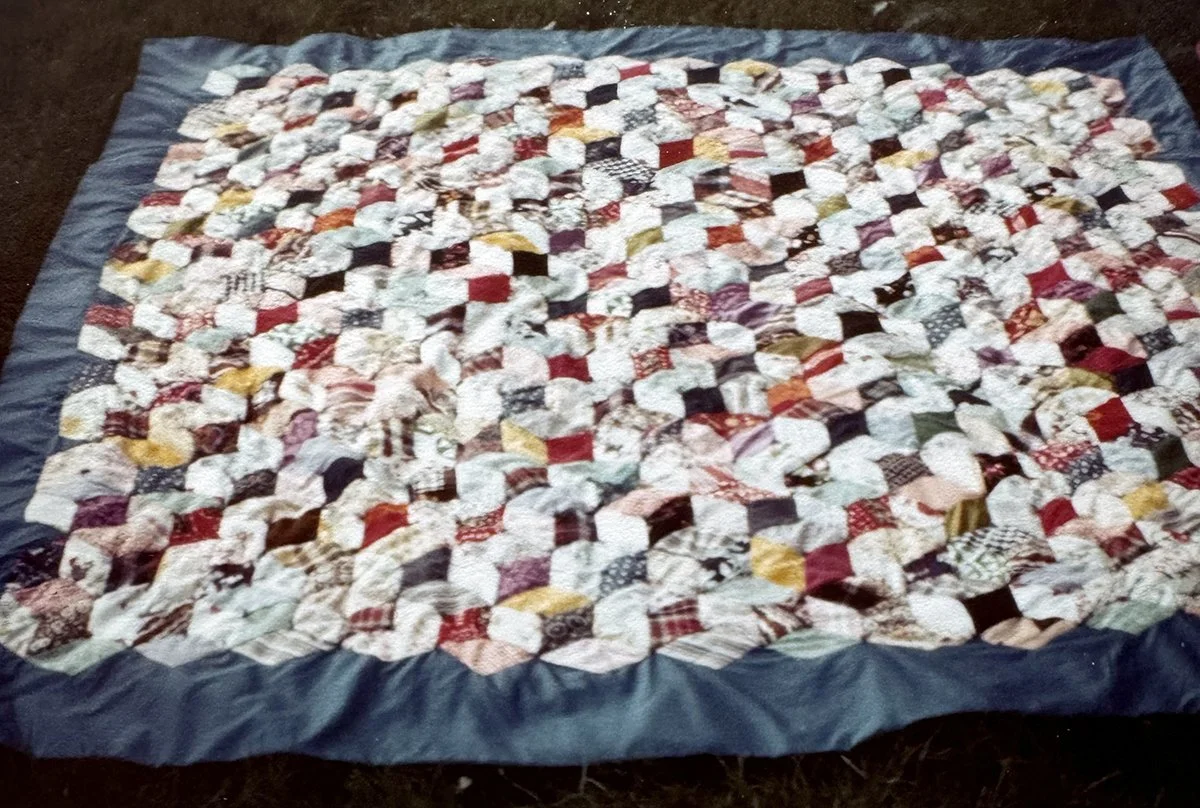
A Baby's Blocks
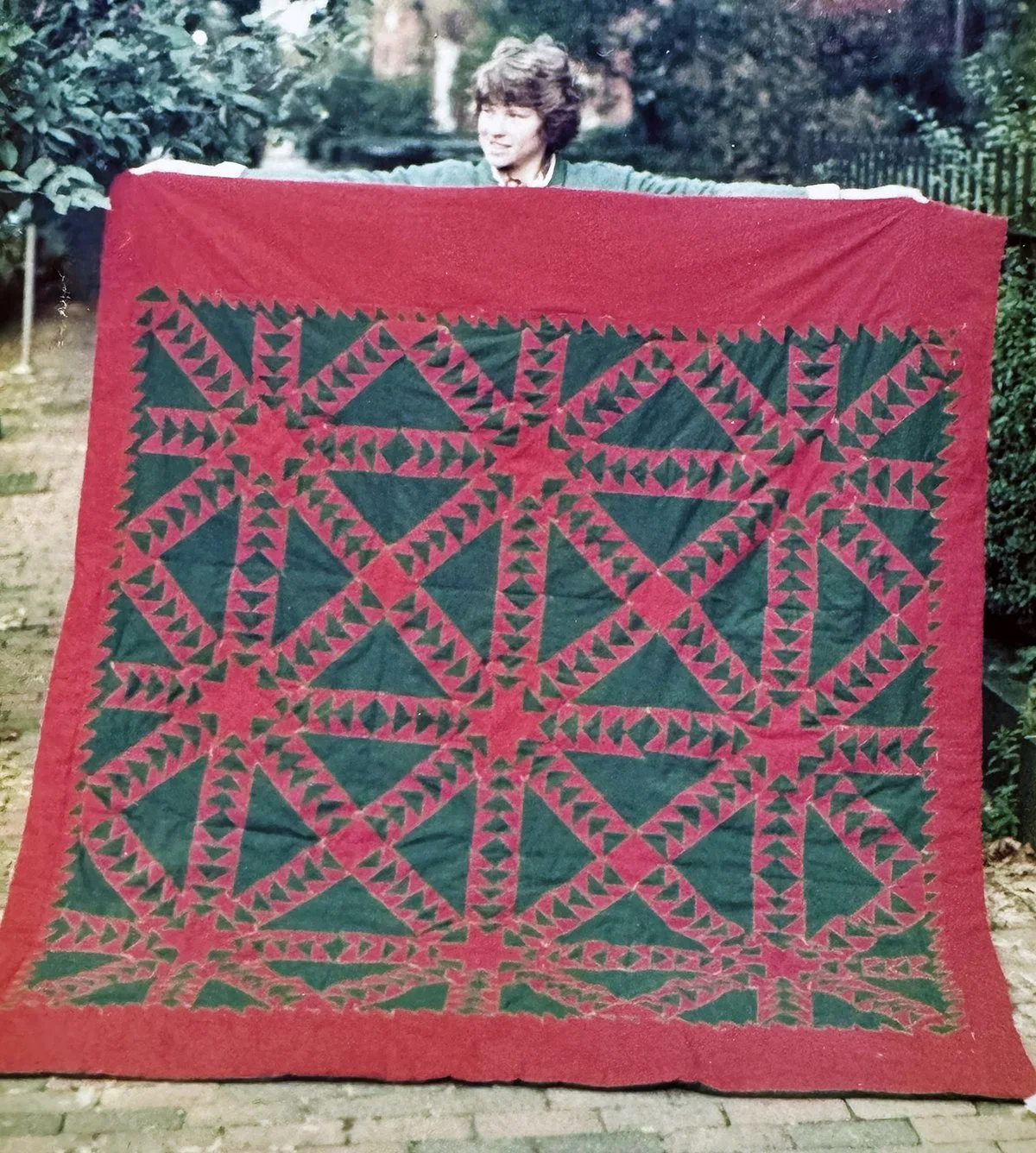
Commissioned Amish style quilt
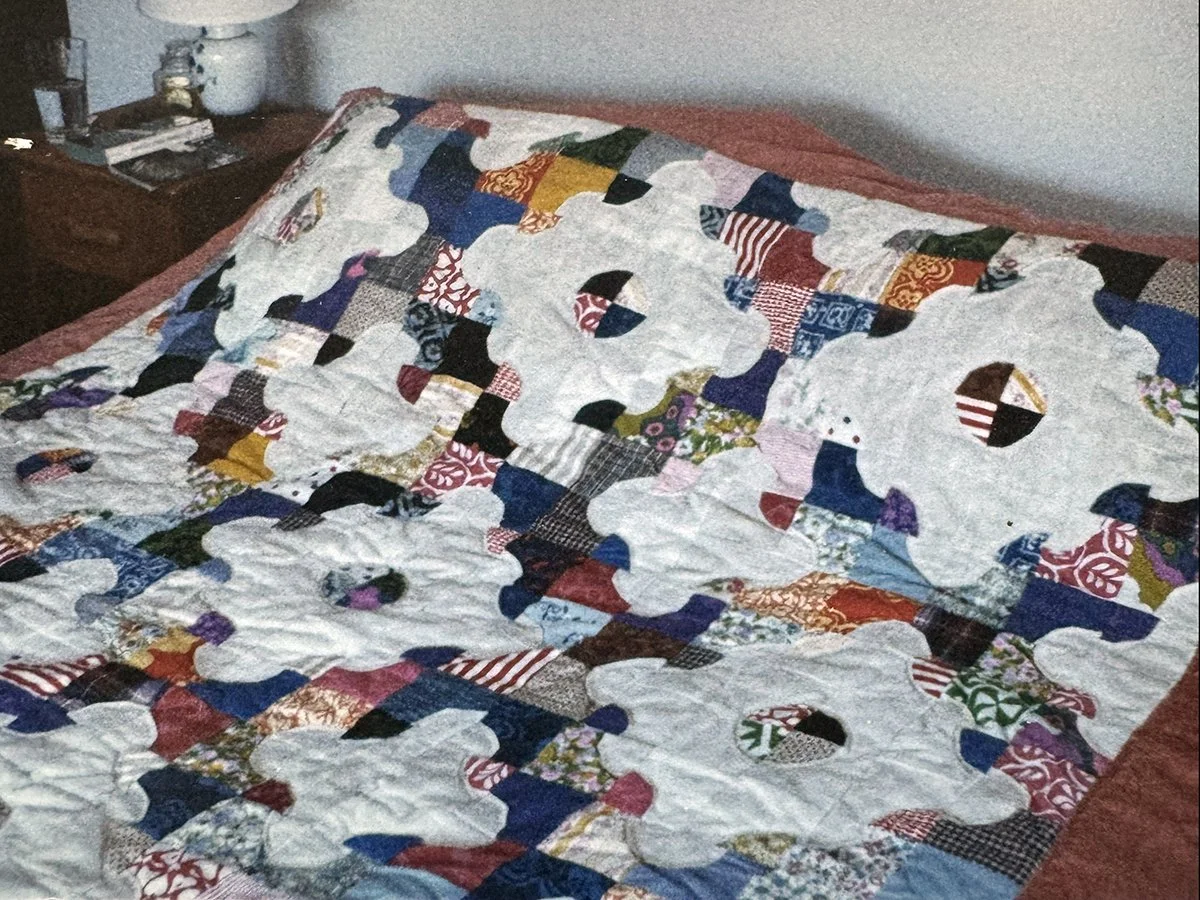
Around The World
Her next quilt was a hand-pieced Log Cabin with tiny strips; still a favorite in her Oeuvre. During the year of piecing this one, she moved to Cazenovia, NY, was married, pregnant and used her quilt frame for the last time to quilt that piece. She was introduced to a more portable way of working, using a large embroidery hoop and met other quilters for the first time.
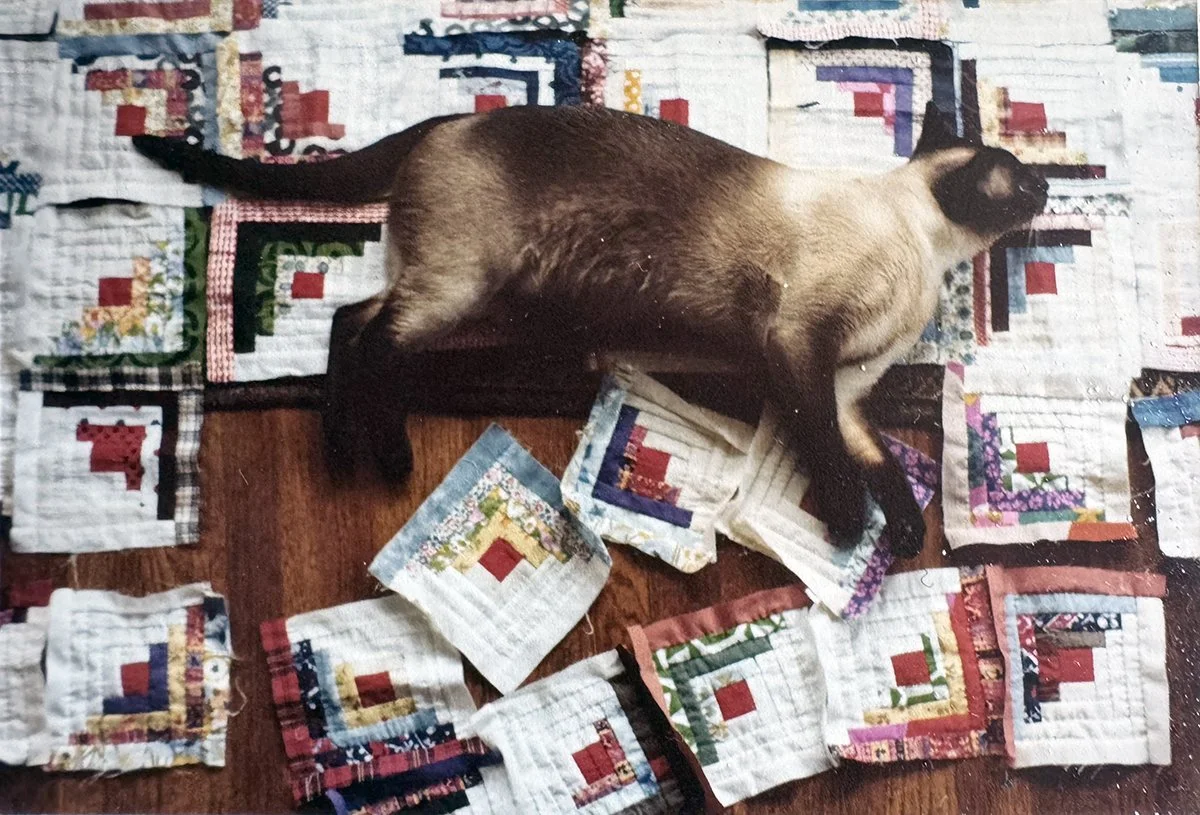
Log Cabin
