

The “White” Quilt

During the two years (according to the embroidered date on the log cabin quilt, it was made between 1978 and 1980, which is earlier than I had reported in this “perfect” document, I was also chomping at the bit and planning for my next piece.
The quilting had been difficult on the log cabin, because I “went against” the sewing lines of the logs, to make it stronger, and was often quilting through 4 layers, I dreamed next of having no seams or only very few to quilt through, and making the quilting itself be the main event. I decided to select only three colors, in addition to off-white for the back, and used some beautiful polished solid cottons to construct a square within a square, with the inner square turned on its corners; as in a well-known Amish design (though a true Amish quilt would have been made with linsey-woolsey, a durable and possibly hand-woven blend of linen and wool). I used a woolen batting for this piece.
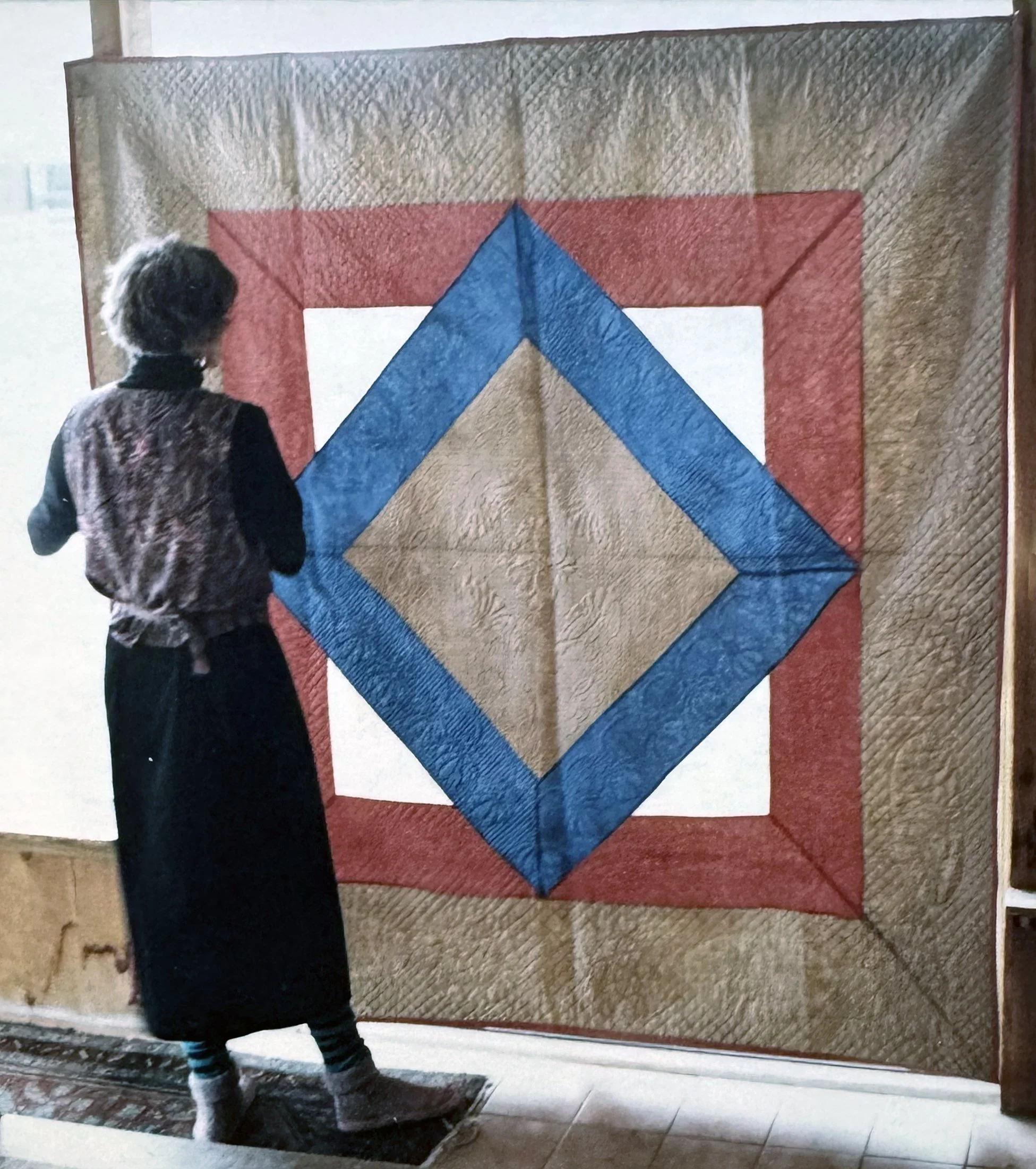
Etude
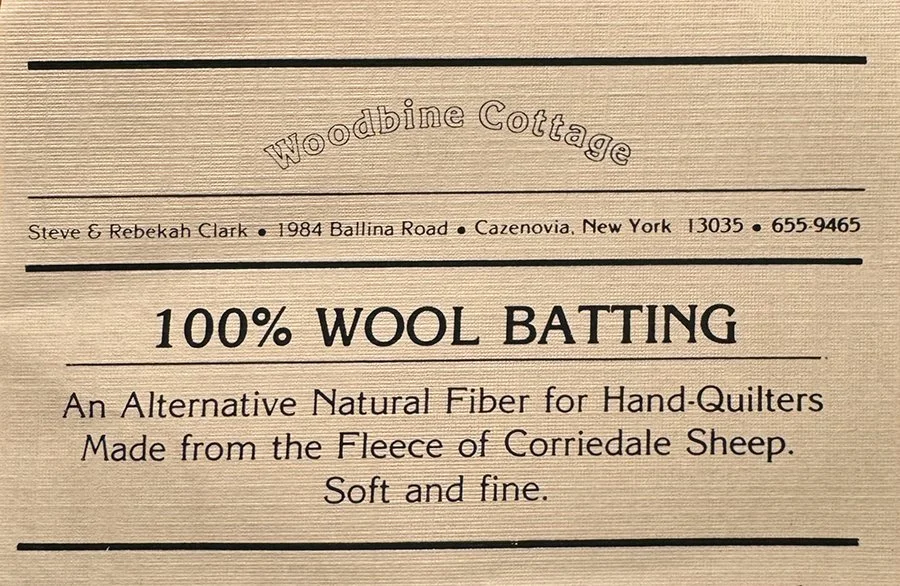
At the same point in time, My spouse had begun raising sheep, and having no intention of allowing weaving and knitting to take my attention away from quilting, had started a small “business” selling woolen batting. I never got the business off the ground; I was unsure that other quilters would like the product. The “hand” was lovely, and a needle glided through the layers due to the lanolin remaining in the wool, also a fine loft to fiber ratio could be achieved, to show off the quilting patterns with little weight, but I was concerned about the fibers migrating (which they did) and difficulties with inquiries about washing instructions, so used the wool batting in my own quilts until it was gone. The quilts also became more attractive to moths; wouldn’t you know, and to keep them from chewing through the cotton to get the wool, needed protection. Over time I stopped using it. I called this quilt “Etude” because it was a study, of quilting patterns, and of patience. It took a year to quilt, and I worked it almost every day after the children had gone to bed, while watching television. I’d learned, by then, that it was it was preferable to use a large embroidery hoop for quilting, rather than the large wooden frame, because it was portable, and therefore more sociable and practical. A frame does have a wonderful use though, for a group of people to work on the same piece at once. Once called a “quilting bee” where “the tongues flew as fast as the needles”, quilting on a common project is a lot of fun and I had several chances to do it among the quilting groups I participated in. In those days, there were multiple groups and meetings, often fondly referred to as “stitch and bitch” groups. I remember one that met in Fayetteville, NY, for a number of years. These were informal; bouncing between the living rooms of the women in the groups; usually with tea or coffee and a “with-it” made by the host, to have with it.
Eventually we all participated in forming a guild, which grew gigantic in its first few years, bringing hundreds of quilters from the Syracuse area. We called it the Towpath Quilt Guild, because Syracuse was famously located on the Erie Canal and the local towpaths were popular places to walk and imagine the old ways and days. The guild was able to bring in speakers, and put on events, and it was exciting to be there at the beginning. Eventually, there became a “split” between quilters primarily interested in traditional quilt making, using hand-sewing to piece and to quilt, and traditional patterns, and non-traditional quilt makers using machines for all or part of the sewing and designing their own work. I straddled for awhile; using both, but because of my color choices, and tendency to veer from a plan, after making “Etude”, I found myself most comfortable in the non-traditional groups.
One famous speaker who came in those early days was Jinny Beyer, whose book “Medallion Quilts” had just come out. It was a beautiful and inspiring book, and it stimulated my next quilt, “Woodbine Medallion”